

March 2026 Sunday Readings

Scripture Readings for Sundays in March 2026
Follow the Scripture readings for Sundays of the Year. Read and reflect on them as part of your daily prayer.
Select Month: January / February / March / April / May / June / July / August / September / October / November / December
_________________________________________
Sunday Mass Readings for
March 2026 – Year A
Sunday 1st March 2026 – 2nd Sunday of Lent
Sunday 8th March 2026 – 3rd Sunday of Lent
Sunday 15th March 2026 – 4th Sunday of Lent
Sunday 22nd March 2026 – 5th Sunday of Lent
Sunday 29th March 2026 – Palm Sunday of the Passion of the Lord
_________________________________________

Sunday 1st March – 2nd Sunday of Lent
A reading from the Book of Genesis 12:1-4
The call of Abraham, father of the People of God
The Lord said to Abram, ‘Leave your country, your family and your father’s house, for the land I will show you. I will make you a great nation; I will bless you and make your name so famous that it will be used as a blessing.
‘I will bless those who bless you:
I will curse those who slight you.
All the tribes of the earth
shall bless themselves by you.’
So Abram went as the Lord told him.
Psalm: 32:4-5, 18-20, 22
The word of the Lord is faithful
and all his works to be trusted.
The Lord loves justice and right
and fills the earth with his love.
The Lord looks on those who revere him,
on those who hope in his love,
to rescue their souls from death,
to keep them alive in famine.
Our soul is waiting for the Lord.
The Lord is our help and our shield.
May your love be upon us, O Lord,
as we place all our hope in you.
A reading from the Second Letter of St Paul to Timothy 1:8-10
God calls and enlightens us
With me, bear the hardships for the sake of the Good News, relying on the power of God who has saved us and called us to be holy – not because of anything we ourselves have done but for his own purpose and by his own grace. This grace had already been granted to us, in Christ Jesus, before the beginning of time, but it has only been revealed by the Appearing of our saviour Christ Jesus. He abolished death, and he has proclaimed life and immortality through the Good News.
A reading from the Gospel of St Matthew 17:1-9
His face shone like the sun
Jesus took with him Peter and James and his brother John and led them up a high mountain where they could be alone. There in their presence he was transfigured: his face shone like the sun and his clothes became as white as the light. Suddenly Moses and Elijah appeared to them; they were talking with him. Then Peter spoke to Jesus. “Lord,” he said “it is wonderful for us to be here; if you wish, I will make three tents here, one for you, one for Moses and one for Elijah.” He was still speaking when suddenly a bright cloud covered them with shadow, and from the cloud there came a voice which said, “This is my Son, the Beloved; he enjoys my favour. Listen to him.” When they heard this the disciples fell on their faces overcome with fear. But Jesus came up and touched them. “Stand up,” he said “do not be afraid.” And when they raised their eyes they saw no one but only Jesus. As they came down from the mountain Jesus gave them this order, “Tell no one about the vision until the Son of Man has risen from the dead.”
Sunday 8th March – 3rd Sunday of Lent
A reading from the Book of Exodus 17:3-7
Give us water to drink.
Tormented by thirst, the people complained against Moses. “Why did you bring us out of Egypt?” they said. “Was it so that I should die of thirst, my children too, and my cattle?”
Moses appealed to the Lord. “How am I to deal with this people?” he said. “A little more and they will stone me!” the Lord said to Moses, “Take with you some of the elders of Israel and move on to the forefront of the people; take in your hand the staff with which you struck the river, and go. I shall be standing before you there on the rock, at Horeb. You must strike the rock, and water will flow from it for the people to drink.” This is what Moses did, in the sight of the elders of Israel. The place was named Massah and Meribah because of the grumbling of the sons of Israel and because they put the Lord to the test by saying, ‘Is the Lord with us, or not?’
Psalm: 94:1-2, 6-9
Come, ring out our joy to the Lord;
hail the rock who saves us.
Let us come before him, giving thanks,
with songs let us hail the Lord.
Come in; let us bow and bend low;
let us kneel before the God who made us:
for he is our God and we
the people who belong to his pasture,
the flock that is led by his hand.
O that today you would listen to his voice!
‘Harden not your hearts as at Meribah,
as on that day at Massah in the desert
when your fathers put me to the test;
when they tried me, though they saw my work.’
A reading from the Letter of St Paul to the Romans 5:1-2, 5-8
The love of God has been poured into our hearts by the Holy Spirit which has been given us.
Through our Lord Jesus Christ, by faith we are judged righteous and at peace with God, since it is by faith and through Jesus that we have entered this state of grace in which we can boast about looking forward to God’s glory. And this hope is not deceptive, because the love of God has been poured into our hearts by the Holy Spirit which has been given us. We were still helpless when at his appointed moment Christ died for sinful men. It is not easy to die even for a good man – though of course for someone really worthy, a man might be prepared to die – but what proves that God loves us is that Christ died for us while we were still sinners.
A reading from the Gospel of St John 4:5-42
A spring of water welling up to eternal life
Jesus came to the Samaritan town called Sychar, near the land that Jacob gave to his son Joseph. Jacob’s well is there and Jesus, tired by the journey, sat straight down by the well. It was about the sixth hour. When a Samaritan woman came to draw water, Jesus said to her, “Give me a drink.” His disciples had gone into the town to buy food. The Samaritan woman said to him, “What? You are a Jew and you ask me, a Samaritan, for a drink?” – Jews, in fact, do not associate with Samaritans. Jesus replied:
“If you only knew what God is offering
and who it is that is saying to you:
Give me a drink, you would have been the one to ask,
and he would have given you living water.”
“You have no bucket, sir,” she answered “and the well is deep: how could you get this living water? Are you a greater man than our father Jacob who gave us this well and drank from it himself with his sons and his cattle?” Jesus replied:
“Whoever drinks this water
will get thirsty again;
but anyone who drinks the water that I shall give
will never be thirsty again:
the water that I shall give
will turn into a spring inside him,
welling up to eternal life.”
“Sir,” said the woman “give me some of that water, so that I may never get thirsty and never have to come here again to draw water.” “Go and call your husband” said Jesus to her “and come back here.” The woman answered, “I have no husband.” He said to her, “You are right to say, “I have no husband”; for although you have had five, the one you have now is not your husband. You spoke the truth there.” “I see you are a prophet, sir” said the woman. “Our fathers worshipped on this mountain, while you say that Jerusalem is the place where one ought to worship.” Jesus said:
“Believe me, woman,
the hour is coming
when you will worship the Father
neither on this mountain nor in Jerusalem.
You worship what you do not know;
we worship what we do know:
for salvation comes from the Jews.
But the hour will come
– in fact it is here already –
when true worshippers will worship the Father in spirit and truth:
that is the kind of worshipper the Father wants.
God is spirit,
and those who worship
must worship in spirit and truth.”
The woman said to him, “I know that Messiah – that is, Christ – is coming; and when he comes he will tell us everything.” “I who am speaking to you,” said Jesus “I am he.”
At this point his disciples returned, and were surprised to find him speaking to a woman, though none of them asked, “What do you want from her?” or, “Why are you talking to her?” The woman put down her water jar and hurried back to the town to tell the people. “Come and see a man who has told me everything I ever did; I wonder if he is the Christ?” This brought people out of the town and they started walking towards him.
Meanwhile, the disciples were urging him, “Rabbi, do have something to eat;” but he said, “I have food to eat that you do not know about.” So the disciples asked one another, “Has someone been bringing him food?” But Jesus said:
“My food is to do the will of the one who sent me,
and to complete his work.
Have you not got a saying:
Four months and then the harvest?
Well, I tell you:
Look around you, look at the fields;
already they are white, ready for harvest!
Already the reaper is being paid his wages,
already he is bringing in the grain for eternal life,
and thus sower and reaper rejoice together.
For here the proverb holds good:
one sows, another reaps;
I sent you to reap a harvest you had not worked for.
Others worked for it;
and you have come into the rewards of their trouble.”
Many Samaritans of that town had believed in him on the strength of the woman’s testimony when she said, “He told me all I have ever done”, so, when the Samaritans came up to him, they begged him to stay with them. He stayed for two days, and when he spoke to them many more came to believe; and they said to the woman, “Now we no longer believe because of what you told us; we have heard him ourselves and we know that he really is the saviour of the world.”
A reading from the First Book of Samuel 16:1, 6-7, 10-131
David is anointed king of Israel.
The Lord said to Samuel, “Fill your horn with oil and go. I am sending you to Jesse of Bethlehem, for I have chosen myself a king among his sons.” When Samuel arrived, he caught sight of Eliab and thought, “Surely the Lord’s anointed stands there before him,” but the Lord said to Samuel, “Take no notice of his appearance or his height, for I have rejected him: God does not see as man sees: man looks at appearances but the Lord looks at the heart.” Jesse presented his seven sons to Samuel, but Samuel said to Jesse, “The Lord has not chosen these.” He then asked Jesse, “Are these all the sons you have?” He answered, “There is still one left, the youngest; he is out looking after the sheep.” Then Samuel said to Jesse, “Send for him; we will not sit down to eat until he comes.” Jesse had him sent for, a boy of fresh complexion, with fine eyes and pleasant bearing. The Lord said, “Come, anoint him, for this is the one.” At this, Samuel took the horn of oil and anointed him where he stood with his brothers; and the spirit of the Lord seized on David and stayed with him from that day on.
Psalm: 23
The Lord is my shepherd; there is nothing I shall want.
Fresh and green are the pastures
where he gives me repose.
Near restful waters he leads me,
to revive my drooping spirit.
He guides me along the right path;
he is true to his name.
If I should walk in the valley of darkness
no evil would I fear.
You are there with your crook and your staff;
with these you give me comfort.
You have prepared a banquet for me
in the sight of my foes.
My head you have anointed with oil;
my cup is overflowing.
Surely goodness and kindness shall follow me
all the days of my life.
In the Lord’s own house shall I dwell
for ever and ever.
A reading from the Letter of St Paul to the Ephesians 5:8-14
Rise from the dead, and Christ will shine on you.
You were darkness once, but now you are light in the Lord; be like children of light, for the effects of the light are seen in complete goodness and right living and truth. Try to discover what the Lord wants of you, having nothing to do with the futile works of darkness but exposing them by contrast. The things which are done in secret are things that people are ashamed even to speak of; but anything exposed by the light will be illuminated and anything illuminated turns into light. That is why it is said:
Wake up from your sleep, rise from the dead, and Christ will shine on you.
A reading from the Gospel of St John 9:1-41
He went off and washed himself, and came away with his sight restored
As Jesus went along, he saw a man who had been blind from birth. His disciples asked him, “Rabbi, who sinned, this man or his parents, for him to have been born blind?” “Neither he nor his parents sinned,” Jesus answered “he was born blind so that the works of God might be displayed in him.
“As long as the day lasts
I must carry out the work of the one who sent me;
the night will soon be here when no one can work.
As long as I am in the world
I am the light of the world.”
Having said this, he spat on the ground, made a paste with the spittle, put this over the eyes of the blind man, and said to him, “Go and wash in the Pool of Siloam” (a name that means ‘sent’). So the blind man went off and washed himself, and came away with his sight restored.
His neighbours and people who earlier had seen him begging said, “Isn’t this the man who used to sit and beg?” Some said, “Yes, it is the same one.” Others said, “No, he only looks like him.” The man himself said, “I am the man.” So they said to him, “Then how do your eyes come to be open?” “The man called Jesus” he answered “made a paste, daubed my eyes with it and said to me, ‘Go and wash at Siloam’; so I went, and when I washed I could see.” They asked, “Where is he?” “I don’t know” he answered.
They brought the man who had been blind to the Pharisees. It had been a sabbath day when Jesus made the paste and opened the man’s eyes, so when the Pharisees asked him how he had come to see, he said, “He put a paste on my eyes, and I washed, and I can see.” Then some of the Pharisees said, “This man cannot be from God: he does not keep the sabbath.” Others said, “How could a sinner produce signs like this?” And there was disagreement among them. So they spoke to the blind man again, “What have you to say about him yourself, now that he has opened your eyes?” “He is a prophet” replied the man. However, the Jews would not believe that the man had been blind and had gained his sight, without first sending for his parents and asking them, “Is this man really your son who you say was born blind? If so, how is it that he is now able to see?” His parents answered, “We know he is our son and we know he was born blind, but we do not know how it is that he can see now, or who opened his eyes. He is old enough: let him speak for himself.” His parents spoke like this out of fear of the Jews, who had already agreed to expel from the synagogue anyone who should acknowledge Jesus as the Christ. This was why his parents said, “He is old enough; ask him.”
So the Jews again sent for the man and said to him, “Give glory to God! For our part, we know that this man is a sinner.” The man answered, “I don’t know if he is a sinner; I only know that I was blind and now I can see.” They said to him, “What did he do to you? How did he open your eyes?” He replied, “I have told you once and you wouldn’t listen. Why do you want to hear it all again? Do you want to become his disciples too?” At this they hurled abuse at him: “You can be his disciple,” they said “we are disciples of Moses: we know that God spoke to Moses, but as for this man, we do not know where he comes from.” The man replied, “Now here is an astonishing thing! He has opened my eyes, and you don’t know where he comes from! We know that God doesn’t listen to sinners, but God does listen to men who are devout and do his will. Ever since the world began it is unheard of for anyone to open the eyes of a man who was born blind; if this man were not from God, he couldn’t do a thing.” “Are you trying to teach us,” they replied “and you a sinner through and through, since you were born!” And they drove him away.
Jesus heard they had driven him away, and when he found him he said to him, “Do you believe in the Son of Man?” “Sir,” the man replied “tell me who he is so that I may believe in him.” Jesus said, “You are looking at him; he is speaking to you.” The man said, “Lord, I believe”, and worshipped him.
Jesus said:
“It is for judgement
that I have come into this world,
so that those without sight may see
and those with sight turn blind.”
Hearing this, some Pharisees who were present said to him, “We are not blind, surely?” Jesus replied:
“Blind? If you were,
you would not be guilty,
but since you say, ‘We see,’
your guilt remains.”
Sunday 22nd March – 5th Sunday of Lent
A reading from the Prophet Ezekiel 37:12-14
I shall put my spirit in you, and you will live
The Lord says this: I am now going to open your graves; I mean to raise you from your graves, my people, and lead you back to the soil of Israel. And you will know that I am the Lord, when I open your graves and raise you from your graves, my people. And I shall put my spirit in you, and you will live, and I shall resettle you on your own soil; and you will know that I, the Lord, have said and done this – it is the Lord who speaks.
Psalm: 129
Out of the depths I cry to you, O Lord,
Lord, hear my voice!
O let your ears be attentive
to the voice of my pleading.
If you, O Lord, should mark our guilt,
Lord, who would survive?
But with you is found forgiveness:
for this we revere you.
My soul is waiting for the Lord.
I count on his word.
My soul is longing for the Lord
more than watchman for daybreak.
(Let the watchman count on daybreak
and Israel on the Lord.)
Because with the Lord there is mercy
and fullness of redemption,
Israel indeed he will redeem
from all its iniquity.
A reading from the Letter of St Paul to the Romans 8:8-11
The Spirit of him who raised Jesus from the dead is living in you
People who are interested only in unspiritual things can never be pleasing to God. Your interests, however, are not in the unspiritual, but in the spiritual, since the Spirit of God has made his home in you. In fact, unless you possessed the Spirit of Christ you would not belong to him. Though your body may be dead it is because of sin, but if Christ is in you then your spirit is life itself because you have been justified; and if the Spirit of him who raised Jesus from the dead is living in you, then he who raised Jesus from the dead will give life to your own mortal bodies through his Spirit living in you.
A reading from the Gospel of St John 11:1-45
Jesus fasts for forty days and is tempted.
There was a man named Lazarus who lived in the village of Bethany with the two sisters, Mary and Martha, and he was ill. It was the same Mary, the sister of the sick man Lazarus, who anointed the Lord with ointment and wiped his feet with her hair. The sisters sent this message to Jesus, “Lord, the man you love is ill.” On receiving the message, Jesus said, “This sickness will end not in death but in God’s glory, and through it the Son of God will be glorified.”
Jesus loved Martha and her sister and Lazarus, yet when he heard that Lazarus was ill he stayed where he was for two more days before saying to the disciples, “Let us go to Judaea.” The disciples said, “Rabbi, it is not long since the Jews wanted to stone you; are you going back again?” Jesus replied:
“Are there not twelve hours in the day?
A man can walk in the daytime without stumbling
because he has the light of this world to see by;
but if he walks at night he stumbles,
because there is no light to guide him.”
He said that and then added, “Our friend Lazarus is resting, I am going to wake him.” The disciples said to him, “Lord, if he is able to rest he is sure to get better.” The phrase Jesus used referred to the death of Lazarus, but they thought that by ‘rest’ he meant ‘sleep’, so Jesus put it plainly, “Lazarus is dead; and for your sake I am glad I was not there because now you will believe. But let us go to him.” Then Thomas – known as the Twin – said to the other disciples, “Let us go too, and die with him.”
On arriving, Jesus found that Lazarus had been in the tomb for four days already. Bethany is only about two miles from Jerusalem, and many Jews had come to Martha and Mary to sympathise with them over their brother. When Martha heard that Jesus had come she went to meet him. Mary remained sitting in the house. Martha said to Jesus, “If you had been here, my brother would not have died, but I know that, even now, whatever you ask of God, he will grant you.” “Your brother” said Jesus to her “will rise again.” Martha said, “I know he will rise again at the resurrection on the last day.” Jesus said:
“I am the resurrection and the life.
If anyone believes in me, even though he dies he will live,
and whoever lives and believes in me will never die.
Do you believe this?”
“Yes, Lord,” she said “I believe that you are the Christ, the Son of God, the one who was to come into this world.”
When she had said this, she went and called her sister Mary, saying in a low voice, “The Master is here and wants to see you.” Hearing this, Mary got up quickly and went to him. Jesus had not yet come into the village; he was still at the place where Martha had met him. When the Jews who were in the house sympathising with Mary saw her get up so quickly and go out, they followed her, thinking that she was going to the tomb to weep there.
Mary went to Jesus, and as soon as she saw him she threw herself at his feet, saying, “Lord, if you had been here, my brother would not have died.” At the sight of her tears, and those of the Jews who followed her, Jesus said in great distress, with a sigh that came straight from the heart, “Where have you put him?” They said, “Lord, come and see.” Jesus wept; and the Jews said, “See how much he loved him!” But there were some who remarked, “He opened the eyes of the blind man, could he not have prevented this man’s death?” Still sighing, Jesus reached the tomb: it was a cave with a stone to close the opening. Jesus said, “Take the stone away.” Martha said to him, “Lord, by now he will smell; this is the fourth day.” Jesus replied, “Have I not told you that if you believe you will see the glory of God?” So they took away the stone. Then Jesus lifted up his eyes and said:
“Father, I thank you for hearing my prayer.
I knew indeed that you always hear me,
but I speak for the sake of all these who stand round me,
so that they may believe it was you who sent me.”
When he had said this, he cried in a loud voice, “Lazarus, here! Come out!” The dead man came out, his feet and hands bound with bands of stuff and a cloth round his face. Jesus said to them, “Unbind him, let him go free.”
Many of the Jews who had come to visit Mary and had seen what he did believed in him.
Sunday 29th March – Palm Sunday of the Passion of the Lord
PALM SUNDAY OF THE PASSION OF THE LORD
A reading from the Prophet Isaiah 50:4-7
I did not cover my face against insult: I know I shall not be shamed
- The Lord has given me
a disciple’s tongue.
So that I may know how to reply to the wearied
he provides me with speech.
Each morning he wakes me to hear,
to listen like a disciple.
The Lord has opened my ear.
For my part, I made no resistance,
neither did I turn away.
I offered my back to those who struck me,
my cheeks to those who tore at my beard;
I did not cover my face
against insult and spittle.
The Lord comes to my help,
so that I am untouched by the insults.
So, too, I set my face like flint;
I know I shall not be shamed.
Psalm 21(22):8-9, 17-20, 24-24
My God, my God, why have you forsaken me?
All who see me deride me.
They curl their lips, they toss their heads.
‘He trusted in the Lord, let him save him;
let him release him if this is his friend.’
Many dogs have surrounded me,
a band of the wicked beset me.
They tear holes in my hands and my feet
I can count every one of my bones.
They divide my clothing among them.
They cast lots for my robe.
O Lord, do not leave me alone,
my strength, make haste to help me!
I will tell of your name to my brethren
and praise you where they are assembled.
‘You who fear the Lord give him praise;
all sons of Jacob, give him glory.
Revere him, Israel’s sons.
Christ humbled himself but God raised him high
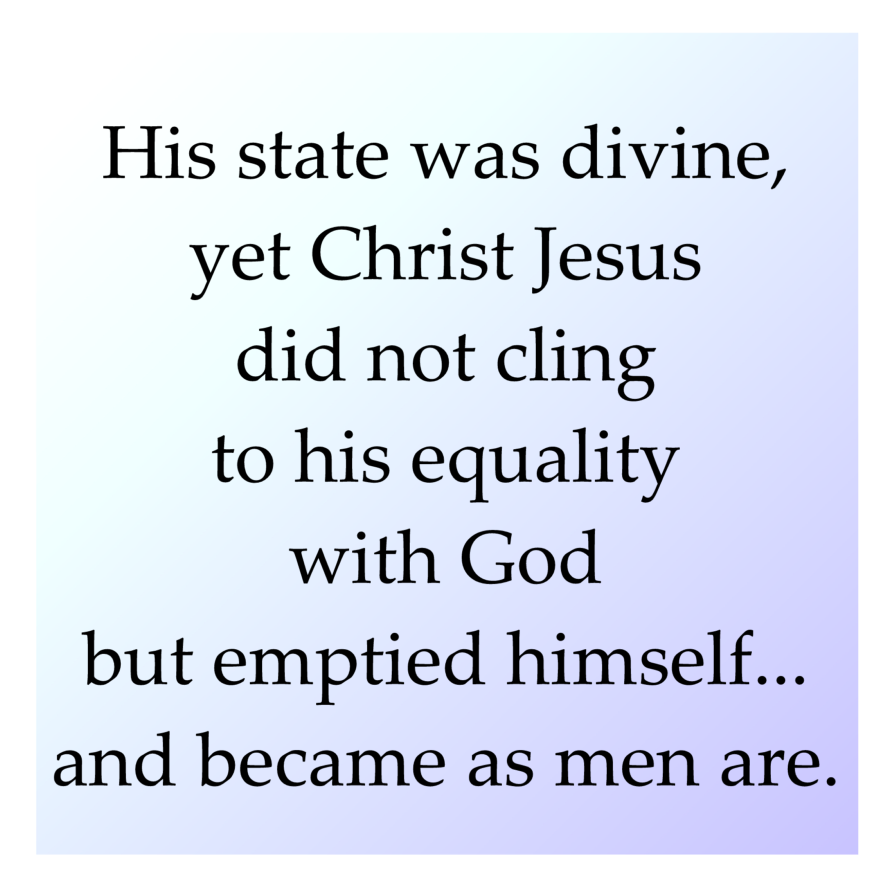
- His state was divine,
yet Christ Jesus did not cling
to his equality with God
but emptied himself
to assume the condition of a slave
and became as men are;
and being as all men are,
he was humbler yet,
even to accepting death,
death on a cross.
But God raised him high
and gave him the name
which is above all other names
so that all beings
in the heavens, on earth and in the underworld,
should bend the knee at the name of Jesus
and that every tongue should acclaim
Jesus Christ as Lord,
to the glory of God the Father.
A reading from the Gospel of St Matthew 27:11-54 (Shorter Form)
The passion of our Lord Jesus Christ
Jesus, then, was brought before Pontius Pilate, and the governor put to him this question: “Are you the king of the Jews?” Jesus replied, “It is you who say it.” But when he was accused by the chief priests and the elders he refused to answer at all. Pilate then said to him, “Do you not hear how many charges they have brought against you?” But to the governor’s complete amazement, he offered no reply to any of the charges.
At festival time it was the governor’s practice to release a prisoner for the people, anyone they chose. Now there was at that time a notorious prisoner whose name was Barabbas. So when the crowd gathered, Pilate said to them, “Which do you want me to release for you: Barabbas, or Jesus who is called Christ?” For Pilate knew it was out of jealousy that they had handed him over.
Now as he was seated in the chair of judgement, his wife sent him a message, “Have nothing to do with that man; I have been upset all day by a dream I had about him.”
The chief priests and the elders, however, had persuaded the crowd to demand the release of Barabbas and the execution of Jesus. So when the governor spoke and asked them, “Which of the two do you want me to release for you?” they said, “Barabbas.” “But in that case,” Pilate said to them, “what am I to do with Jesus who is called Christ?” They all said, “Let him be crucified!” “Why?” he asked “What harm has he done?” But they shouted all the louder, “Let him be crucified!” Pilate saw that he was making no impression, that in fact a riot was imminent. So he took some water, washed his hands in front of the crowd and said, “I am innocent of this man’s blood. It is your concern.” And the people, to a man, shouted back, “His blood be on us and on our children!” Then he released Barabbas for them. He ordered Jesus to be first scourged and then handed over to be crucified.
The governor’s soldiers took Jesus with them into the Praetorium and collected the whole cohort round him. Then they stripped him and made him wear a scarlet cloak, and having twisted some thorns into a crown they put this on his head and placed a reed in his right hand. To make fun of him they knelt to him saying, “Hail, king of the Jews!” And they spat on him and took the reed and struck him on the head with it. And when they had finished making fun of him, they took off the cloak and dressed him in his own clothes and led him away to crucify him.
On their way out, they came across a man from Cyrene, Simon by name, and enlisted him to carry his cross. When they had reached a place called Golgotha, that is, the place of the skull, they gave him wine to drink mixed with gall, which he tasted but refused to drink. When they had finished crucifying him they shared out his clothing by casting lots, and then sat down and stayed there keeping guard over him.
Above his head was placed the charge against him; it read: “This is Jesus, the King of the Jews.” At the same time two robbers were crucified with him, one on the right and one on the left.
The passers-by jeered at him; they shook their heads and said, “So you would destroy the Temple and rebuild it in three days! Then save yourself! If you are God’s son, come down from the cross!” The chief priests with the scribes and elders mocked him in the same way, “He saved others,” they said “he cannot save himself. He is the king of Israel; let him come down from the cross now, and we will believe in him. He puts his trust in God; now let God rescue him if he wants him. For he did say, ‘I am the son of God.’” Even the robbers who were crucified with him taunted him in the same way.
From the sixth hour there was darkness over all the land until the ninth hour. And about the ninth hour, Jesus cried out in a loud voice, “Eli, Eli, lama sabachthani?” that is, ‘My God, my God, why have you deserted me?’ When some of those who stood there heard this, they said, “The man is calling on Elijah,” and one of them quickly ran to get a sponge which he dipped in vinegar and, putting it on a reed, gave it him to drink. “Wait!” Said the rest of them “and see if Elijah will come to save him.” But Jesus, again crying out in a loud voice, yielded up his spirit.
At that, the veil of the Temple was torn in two from top to bottom; the earth quaked; the rocks were split; the tombs opened and the bodies of many holy men rose from the dead, and these, after his resurrection, came out of the tombs, entered the Holy City and appeared to a number of people. Meanwhile the centurion, together with the others guarding Jesus, had seen the earthquake and all that was taking place, and they were terrified and said, “In truth this was a son of God.”
_________________________________________
Excerpt from THE JERUSALEM BIBLE, copyright (c) 1966 by Darton, Longman & Todd, Ltd. and Doubleday, a division of Penguin Random House, Inc. Reproduced with Permission.
Excerpt from THE GRAIL PSALMS, with permission of A P Watt at United Agents on behalf of The Grail, England. Copyright © 1963 by The Grail, England.
Copyright © 2019-2026 Prayerfulness.com. Users must not reproduce, download, store in any medium, distribute, transmit or retransmit or manipulate any text contained in this website except for non-commercial worship purposes. Thank you.